.svg)
Manufacturing decisions once centred largely on cost, capacity, and compliance. Today they involve a much wider set of trade-offs.
Where should critical products be manufactured? How much supply redundancy is enough? Can a process accommodate greater formulation complexity? And can digital investment improve production rather than simply generate more data?
These are some of the questions moving to the foreground at CPHI Milan 2026, the Global Pharma Event taking place from 6–8 October. With more than 260 industry experts joining, the conference programme will bring the Global Pharma Community together to discuss manufacturing, biomanufacturing, AI and technology, supply chain resilience, regulation, packaging and drug delivery.
Ahead of CPHI Milan 2026, six priorities stand out as the ones shaping the future of pharmaceutical manufacturing.
Geopolitical uncertainty and vulnerabilities in global supply networks are changing how pharmaceutical companies evaluate manufacturing and sourcing decisions.
The objective is not to bring every stage of production closer to home. It’s to know where concentration creates unacceptable risk, and where global sourcing continues to make commercial sense.
Manufacturing resilience can involve:
This tension is part of the wider dialogue at CPHI Milan 2026, where the Global Pharma Community will examine medicine security, API sourcing, and the practical challenges of restructuring pharmaceutical supply chains.
Available capacity answers only one part of the manufacturing question.
Portfolios now include more challenging APIs, complex formulations, modified-release products, and differentiated drug delivery systems. So pharmaceutical companies need to understand what a manufacturing site can produce but also what is technically equipped to handle.
Partner evaluation is consequently extending beyond available production volumes to factors such as:
This makes manufacturability an earlier consideration in product development. A formulation that performs successfully at laboratory scale still needs a process capable of reproducing that performance economically and consistently at commercial scale.
Digital manufacturing has moved beyond the question of whether pharmaceutical companies should automate.
The more relevant question now is what manufacturers can do with connected production data.
Manufacturing execution systems, process analytics, digital twins, predictive maintenance and AI-supported technologies can give manufacturers greater visibility into how a process behaves. Used effectively, these capabilities can help teams detect emerging deviations, anticipate equipment issues, and make faster process decisions.
The Manufacturing 5.0 discussions at CPHI Milan 2026 reflect this shift. The Global Pharma Event placing greater emphasis on moving past isolated digital pilots and embedding capabilities across manufacturing operations.
Technology alone, however, does not create digital maturity. Manufacturers also need the right data infrastructure, processes, workforce capabilities, and operating models to turn information into action.
A successful formulation does not automatically translate into a successful commercial manufacturing process.
Increasing batch size or changing equipment can affect mixing, material handling, compression, drying, coating and other process conditions. Scale-up therefore needs to be considered while the process is being developed, rather than once commercial production is approaching.
At the same time, manufacturers may need to accommodate:
For the global pharma community, the manufacturing question is therefore becoming broader than “Can we make it?”
Pharmaceutical companies need to determine whether a process can be scaled, transferred, controlled, and reproduced throughout the commercial lifecycle.
Quality cannot depend solely on testing the finished product.
Greater process understanding allows manufacturers to identify the material attributes and process parameters most likely to affect product performance and establish controls around them.
This places greater emphasis on:
A well-understood process can also make scale-up, technology transfer, and continued process verification more manageable.
Quality, in this context, is not a final manufacturing checkpoint. It is an attribute that needs to be built into the process from development onwards.
The inaugural CPHI Sustainability Summit, held alongside CPHI Milan 2026, shows how closely sustainability is becoming connected with pharmaceutical operations.
The programme will examine sustainable manufacturing, green chemistry, supply chain decarbonisation, packaging innovation, and evolving regulatory expectations.
For manufacturing teams, the opportunity is to translate these ambitions into measurable process improvements. This can include reducing:
The strongest sustainability initiatives may therefore be those that simultaneously improve environmental performance and manufacturing efficiency without compromising product quality or regulatory requirements.
The manufacturing conversation heading into this global pharma event is not centred on a single breakthrough technology.
Instead, pharmaceutical companies have to address several connected priorities: resilient supply, specialised manufacturing capabilities, intelligent use of production data, scalable processes, built-in quality and sustainable operations.
The common thread is execution. Manufacturing strategies increasingly need to account for how a product can move from development to commercial supply reliably, efficiently and at the required quality, even as products and supply networks become more complex.
As the global pharma community comes together at CPHI Milan 2026, these priorities will help shape discussions not simply about where pharmaceutical manufacturing is heading, but how companies intend to get there.
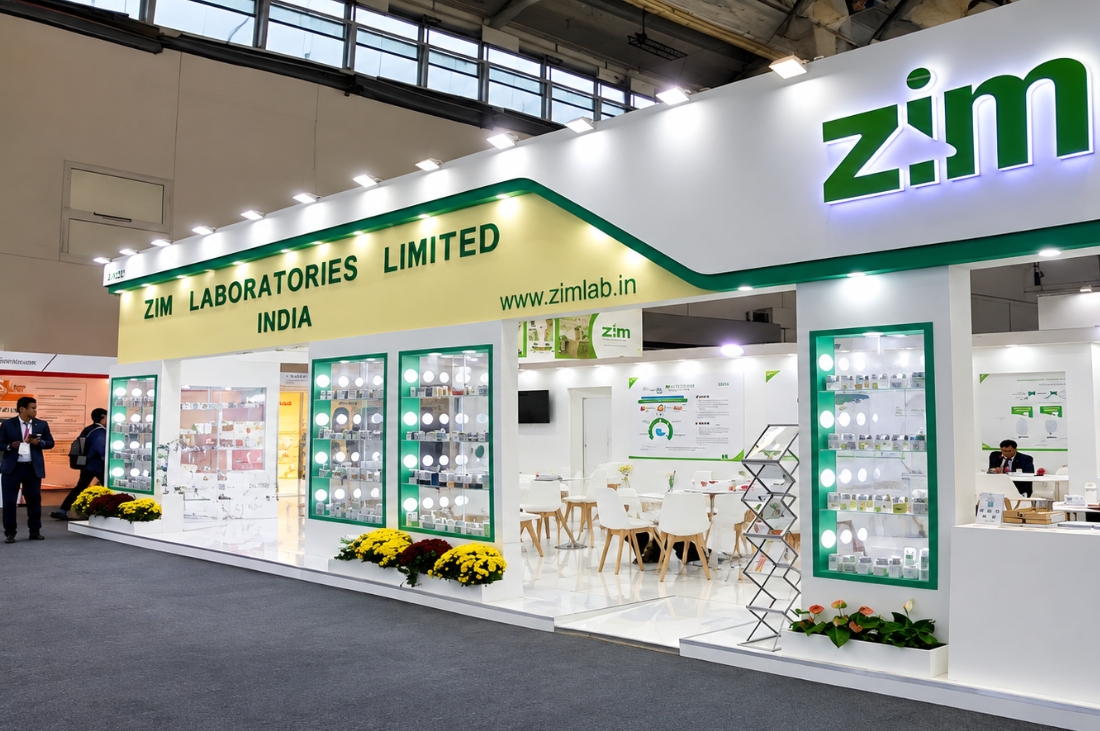
ZIM Laboratories will be attending CPHI Milan 2026 from 6–8 October, joining the Global Pharma Community as pharmaceutical manufacturers, technology providers and industry leaders come together to discuss the next phase of pharmaceutical development and manufacturing.
Connect with the ZIM Laboratories team at this Global Pharma Event to explore its formulation, drug delivery and pharmaceutical manufacturing capabilities and discuss opportunities for developing and scaling differentiated oral drug products.
ZIM Laboratories Limited is a therapy-agnostic and innovative drug delivery solution provider focusing on enhancing patient convenience and treatment adherence to drug intake. We offer a range of technology-based drug delivery solutions and non-infringing proprietary manufacturing processes to develop, manufacture, and supply innovative and differentiated generic pharmaceutical products to our customers globally. At ZIM Labs, we provide our customers with a comprehensive range of oral solid value-added, differentiated generic products in semi-finished and finished formulations. These include granules, pellets (sustained, modified, and extended-release), taste-masked powders, suspensions, tablets, capsules, and Oral Thin Films (OTF).


